Monday, April 26, 2010

Latinos in Higher Education: Too Few to Celebrate


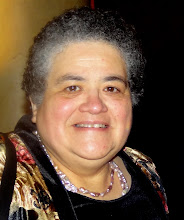
Rosie with Bola Akanji, a visiting scholar from Nigeria,  & Jody Lisberger, chair of URI Women's Studies Program

In MyLatinoVoice.com:  

http://www.mylatinovoice.com/politics-and-us/23-education/1836-latinos-in-higher-education-too-few-to-celebrate.html


In 1974, not long after I finished my bachelor's degree, I visited a friend who was in graduate school at Iowa State University in Des Moines, Iowa. It was the first time I had ever gone to the Midwest and I knew absolutely nothing about it. It never occurred to me that people would be any different from my hometown of San Francisco. Yes, I know; I was very naive.


My friend took me to a favorite restaurant; she wanted me to try the pork chops, cut thick like a steak, the likes of which I had never seen. The waitress came to our table, took one look at me and said, “You aren't from around here, are you?” I stuttered, “ Uh, no…” and I looked around the room. Every other person in the room was several shades whiter than I; it didn't help that it was midwinter when no one in the room would have seen the sun for a couple of months. My hair, coal black, long, thick and curly, really stood out in contrast to the blond and light brown hair of everyone else in the room. I felt vaguely embarrassed; I guess I don't belong here, I thought.

People are not usually as direct as that waitress but I have had many, many experiences like this; veiled, implied, hinted at, but clear, nevertheless. In fact, I still experience it even though my hair is going gray and worn short. The difference is that now I am acutely aware that this situation should have changed more than it has.

I was thinking about this when I went to the open house our new university president's residence. Looking around, I saw everyone there was white except for me. I still feel a brief pang of panic in that kind of situation, but I have been there a long time; I'm sure they have forgotten about my difference. But I can never forget; I was nearly overcome with the desire to go to the president, who was standing by the door amiably greeting all the visitors, to say, “Hi, I'm one of your 12 Latino faculty!” But it was not the time or the place to call attention to myself, although there is never a good time or place for this issue.

This is my seventeenth year at the University of Rhode Island. According to the university's own Fall 2008 statistics, there are five Latinos in the College of Arts and Sciences. Overall, URI has 699 faculty members: only twelve, or 2%, are Latinos or Hispanic; nineteen, or 3.2% are African or African Americans. Four hundred ninety-eight are white.

The Latino or Hispanic statistic has a kind of hidden trick to it: several are from Spain or the Latin American countries; perhaps half are United States-born and/or raised Latinos. What difference does that make? It means that the real numbers have not changed in a substantive way during my years here. The Latino population is increasing exponentially in the United States, even here in little Rhode Island, but Latino students are not getting into the higher education pipeline. Faculty members born in Latin America tend to be from privileged backgrounds because the majority of the people in the region are poor; if one has the money to go to college, there is money for other things as well.

It is only in the United States that Latinos have the upward mobility to go from working-class to university. At least, that’s the way it has been in the past; California’s economic collapse will have a great impact on the ambitions within the Latino community because California has been the state that has turned out the highest number of educated Latinos. California’s disaster is a disaster for all Latinos in the U.S.

The disaster ignited a few years ago with the passage of Proposition 209 in 1996. Proposition 209 ended affirmative action in admissions to the university system, including the University of California, the state’s flagship university and one of the most distinguished and important in the Wiith theworld. My doctorate is from UCLA.

The California university system had to come up with a different way to diversify its student body, and it did, but the long-term effects have included a dramatic drop in the number of Latino and black students. In 2006, marking the ten-year anniversary of the passage of Prop 209, The Nation magazine noted that the incoming class had only 100 African Americans out of 4,802 new students. Latinos are not mentioned.

Rosie with the chair of our History Department, Marie Schwartz

This year, here at the University of Rhode Island, our Talent Development Program, which runs a pre-matriculation session during the summer for disadvantaged students of all colors, is expecting a drop in its enrollment of about 50%. The TD program, like every other part of the university, is suffering from the severe cuts in funding. These developments mean that my classes will be whiter. The cuts in funding and the reduction in scholarships also mean that many young people will not even attempt to go to college.


One disturbing trend I've noticed is how much students are working at full-time jobs. I have run into students who work the night shift and come in barely able to stay awake in class. I made a comment to a student the other day noting the early hour of her e-mail to me, and she said that she read her e-mail just as she got off work at 5:30 in the morning.

A couple of weeks ago, I was standing in a grocery store line, waiting impatiently as the clerks scrambled to find a price for yucca for the customer in front of me. Suddenly, a young man's voice called to me, “Dr. Pegueros—let me help you over here.” The clerk was a student I'd taught a couple of summers earlier, a Latino. I asked him how his studies were going. He'd had to quit, he told me. It just got too expensive, but he was planning to come back. I chatted with him for a bit, my heart squeezed in my chest. I hope that he will get back but I have my doubts. Latinos have the lowest rate of retention; if they actually drop out, as this young man did, the chances of their return drops dramatically.

This is a major problem for our community. We are running way behind the pack, and the less education our children get, the greater disadvantage they will be at as we become the largest minority in the country.

Sunday, April 4, 2010

"Let reverence for the laws become the political religion of the nation."


The controversy over inviting evangelical theologian Greg Boyd to give the keynote address at the inauguration of URI President David Dooley.


The University of Rhode Island inaugurates a new president on April 8. David Dooley, a biologist by training, is described as the son and husband of Baptist ministers. I did not give this detail a second thought; after all, Roger Williams, the founder of Rhode Island, was a Baptist minister. Then he announced that evangelical theologian and pastor Gregory Boyd, known for his opinions on gays (“I have to regard homosexuality as “missing the mark” of God’s idea”) and divorced women (“adulteresses”) would be delivering the keynote address. 

What could President Dooley have been thinking to have invited him? New England is one of the bluest regions in the union; Rhode Island, the most Democratic state.

President Dooley invited Boyd who, he says, is a friend of the family. This worries me more than anything I’d heard about the new president thus far. On one hand, it feels rather like the Obama/Reverend Jeremiah Wright controversy during the presidential election. Obama distanced himself from the pastor as the race progressed. At the time, I remember thinking that Obama must have learned Wright’s controversial opinions over the course of attending his church for twenty years, and seen from the perspective of the black community, his opinions were justified: He claimed that God should punish America for its racism. Could a black person, enduring what blacks have had to endure throughout our history, feel any differently? Slavery, Jim Crow laws, lynching; school segregation; discrimination; general abuse—how could any reasonable person believe differently? Yet Obama must have realized that to white America, his association with him would cause a firestorm, and it did.

Nevertheless, Obama withdrew from the church and, in the opinion of many, threw the Rev. Wright under the bus. But then, he was running for president of the United States. Loyalty fell aside in favor of the pragmatism of winning an election.                                   

President Dooley stated that he chose Gregory Boyd because he had read a great deal by Boyd and felt that his writing had much to offer as a message of hope to the university community. Did it never cross his mind that he would be alienating and marginalizing whole segments of the university community? Or did he consciously choose to throw US under the bus in favor of a Wonder Bread message of hope?

We have major problems at URI. The diminishing financial contribution of the state has forced us to find more and more monies outside of the state budget, and to lean on students for greater and greater fees. Student retention is poor; minority student retention is worse. Programs are slashed; tenure lines are reduced, with department heads having to vie with each other for the lines that open when we lose a member of the faculty to retirement or death. But the new president choose Boyd's vision of hope. For me, his beliefs about women and gays invalidate anything he will say: I have no desire to contemplate the musings of a bigot.

In every organization I have ever worked for, “white, straight, and Christian” have been the default settings. Sometimes an administrator was acutely aware of this and acted to change it, but in most cases, they considered complying with the laws pertaining to discrimination and affirmative action as a nuisance, at best. Sometimes it came down to a discomfort around what to do about Christmas in a non-religious setting. At other times, there were greater stakes.

In the 1980s, I worked for a progressive organization that, in preparation for a major push across the United States, hired large numbers of organizers. Every week, they would take a new staff picture. There were two minorities on staff: A black woman and me. Every week, the two of us would look at the picture and wonder when they would do something about the unrelenting whiteness of the expanding staff. Finally, we posted a note under the picture (by this time there were over 100 staffers) that read, “What’s wrong with this picture?”

Nobody figured it out. We watched as people stared at the picture, trying to divine the “trick” and finally, turned away. They never saw anything wrong with having only one brown and one black face in the sea of white faces.

If any institution is identified with equal opportunity for all, it is the state university. “All” includes a vast sea full of humanity: Jewish, Christians, Buddhist, Hindu, Wiccan, atheist, agnostic, gay, straight, and so on. Christianity should not be the default setting here.

Why shouldn’t an evangelical theologian be the keynote speaker at an inauguration? What about his right to free speech, you may ask. It's not about his rights. It's about setting the tone for the future of a pluralistic institution, a state university.

URI is a public institution; separation of church and state should be respected here more than in any other institution in our country. A theologian brought as a speaker in another situation would be fine; students, faculty and staff would be free to come to listen or to protest or to ignore the whole event. But the inauguration of a president is a unique occasion where the new president lays out his vision for the institution. It is disturbing that he would bring in a speaker who narrows rather than expands that vision.

Would the inauguration of the president of a Baptist college be strange if God were left out of it? I would think so because God is at the center of instruction; why else have a Baptist college? It is the adherence to religious principles that sets it aside from other institutions. But the heart of a state university is adherence to constitutional principles; constitutional government is what finally broke the monarchies of the old world. Our public persona should be blind justice; we should maintain an arena where everyone is free to practice their own religious beliefs, or have none at all, and not be compelled to listen to a religious message on an occasion of state .

To bring an evangelical theologian to give the keynote speech at the inauguration is a betrayal of the separation of church and state precisely because they espouse prejudice-ridden religious dogmas that discriminate that against many people. It declares that it is not enough to draw inspiration from the august body of laws and the secular culture that animates our republic. Religious leaders usually use their Gods to inspire and manipulate their followers. And when they are not followers? Then they are POTENTIAL followers; one must just play the right chord to drag them in.

Abraham Lincoln declared, "Let reverence for the laws become the political religion of the nation." If it was good enough for Lincoln, should be good enough for us.

I doubt that President Dooley intended to proselytize his religious beliefs at his inauguration but it is disturbing to see that he does not realize that that is what the proposed speaker's message is likely to be. A message of hope? In what? In whom? Why pick a speaker who, by his own admission, has never spoken at a secular event? How will a speaker whose life is constructed around the message of the Gospels give a message of hope that does not involve hoping and trusting in his God? Is he even capable of delivering his message without alluding to God?

In the wake of this controversy, President Dooley has issued a statement declaring his belief in diversity. Words. More words. We want deeds; so far, his choice of a keynote speaker indicates his real beliefs far more than his reassuring platitudes.

Periodically, articles and studies appear that claim that the faculty of universities tend to be liberal. I would say that this incident shows “liberalism” at its squishiest and most spineless in its inability to protect itself against those who threaten it. As for having “some speakers who make us uncomfortable,” how about this: Let us begin with one who says we should vote on YOUR marriage.

I feel betrayed. Whatever hope I had in the new president faded when I learned how his mind functioned as shown by this signature choice and his apparent inability to see the insult he has slapped us with. We may not have had a choice in the speaker but we can choose not to participate in a new era of self-deception.

Thursday, March 25, 2010

Remembering the Assassination of Archbishop Oscar Romero


He began to see that silence in the face of repression was acquiescence.


Thirty years ago, March 24, 1980, Archbishop Oscar Arnulfo Romero was assassinated as he celebrated Mass, by a member of Roberto D’Aubuisson’s death squads. The archbishop’s execution was only the most visible of a host of assassinations.

Archbishop Romero’s path was unique. He had started out as a quiet scholar who had little involvement with the world. His superiors picked him to be archbishop because they were sure they could count on him to obey their orders. Until that time, the Catholic Church in Central America had sided firmly with the elite landowners and upper classes. The priests and nuns who got involved with the “Liberation Theology” movement ran into opposition and were censured by Church leaders. Archbishop Romero was drawn into conflict with the government when his colleagues in the movement such as Fr. Rotelio Grande, were murdered by the death squads. He began to see that silence in the face of repression was acquiescence.

In 1980, the Civil War, which had been percolating since the mid-1970s, exploded into a conflict that would kill 75,000 Salvadorans. On December 2, 1980, four church women from the United States, Maryknoll Sisters Ita Ford and Maura Clark; Ursuline Sister Dorothy Kazel, and lay missioner Jean Donovan, were kidnapped, raped and murdered in El Salvador. In El Mozote, in Morazán department, El Salvador, on December 11, 1981, almost 1000 innocent civilians were massacred, the buildings of their village set afire with the bodies of the dead inside. As Alma Guillermoprieto, a Mexican-American journalist who was one of the first to see the site of the massacre, wrote, “countless bits of bones — skulls, rib cages, femurs, a spinal column — poked out of the rubble.” On November 18, 1989, in one of the most infamous instances, six Jesuit priests, their housekeeper and her daughter, were slaughtered. The massacres, murders and assassinations continued unabated until a peace treaty was finally signed in 1992. Even then, the violence did not stop: the repatriation of Salvadorans and their children deported from the United States brought a new kind of bloodshed to El Salvador. Many of those children had grown up into criminal gang activity in Los Angeles, forming Mara Salvatrucha or M-13, and brought the violence back to their own country, making the streets almost as dangerous as they were during the civil war (officially, 1980-1992).

But El Salvador had never really been at peace since January 22, 1932, when the government engaged in the massacre known as La Matanza; approximately 30,000 indigenous people were murdered by General Maximiliano Hernandez Martinez. It was more desirable to the government and the elites to kill the peasants than to feed them. El Salvador has such a gruesome history of state-sponsored terrorism, i.e., the government killing its own citizens, that one can only wonder what drives the violent inclination of the Salvadoran people.

When I first graduated from college, I wanted to travel but when I thought of going to Europe, I had a niggling fear. Most of those countries had killed or betrayed their Jews. As Rod Steiger’s character in The Pawnbroker said, “Europe is a graveyard.” Did I want to visit Paris with its splendid Eiffel Tower but whose Vichy government had collaborated with the Nazis? Or Germany, with its beautiful Bavarian castles and Nazi crematoria? Or Italy, one of the cradles of our civilization, but also the place where Mussolini gathered up the Jews and shipped them off to be killed in Germany?

The sad fact is that you can spin the globe and wherever your finger lands there has been some terrible war or massacre, often by one faction against another within the same country. Making my way east to China and India, or south to Africa, I can name murderous regimes in almost any place. In this hemisphere, the sad fact is that 90% of the indigenous people died at the hands the conquerors, either from combat or from the transmission of diseases that the inadvertently spread. If only the killing had stopped there!

 Archbishop Oscar Arnulfo Romero, (August 15, 1917 – March 24, 1980) lying in state

Thirty years after his murder, Archbishop Romero’s words call out not just to the people of El Salvador, but to the governments and leaders of the world:

I would like to make a special appeal to the men of the army, and specifically to the ranks of the National Guard, the police and the military. Brothers, you come from our own people. You are killing your own brother peasants when any human order to kill must be subordinate to the law of God which says, "Thou shalt not kill." No soldier is obliged to obey an order contrary to the law of God. No one has to obey an immoral law. It is high time you recovered your consciences and obeyed your consciences rather than a sinful order. The church, the defender of the rights of God, of the law of God, of human dignity, of the person, cannot remain silent before such an abomination. We want the government to face the fact that reforms are valueless if they are to be carried out at the cost of so much blood. In the name of God, in the name of this suffering people whose cries rise to heaven more loudly each day, I implore you, I beg you, I order you in the name of God: stop the repression.


Sunday, March 21, 2010

20th Century Central America: A Personal History


On that morning in the summer of 1975, my friend, Juan, told me we had to leave El Salvador immediately. Juan is Guatemalan, and had driven me to El Salvador on the last leg of my visit to Central America. I was there to see my mother's family, and to see my beloved Guatemala and El Salvador, my ancestral homes, again. I cannot believe that no one—either in the United States or in Central America—warned me that there were civil wars going on in both countries. I read the daily paper; my mother was in close contact with her relatives there, but nobody told me, no doubt, because it was not on their radar.


That morning, Juan came in and said we had to leave immediately. He really could not explain why—he did not understand exactly what was going on, but his friends had told him that there was going to be trouble and we should leave immediately. The next day, back in Guatemala, we heard that the University of El Salvador had been taken over by the military. I still have the notebook I bought at the university before we left. I have never written in it but it bears the university's logo. Soon after I returned to San Francisco, my friend Osvaldo was murdered walking through a park near his home in El Salvador. Was it a simple crime, a mugging gone wrong? Or was Osvaldo involved in the underground resistance to the dictatorship? What were you going to do about it if you thought the government engaged in state-sponsored terrorism against you or someone you loved? What could anyone do against the power of the state, even a tiny state like El Salvador? The state is always more powerful than the individual.

It was four years before the assassination of Archbishop Oscar Romero; he was then an auxiliary bishop and still bound to the more conservative, dominant arm of the Roman Catholic Church in El Salvador. After his friend, Fr. Rutilio Grande, was murdered by death squads in 1977, Archbishop Romero evolved to become the man who risked, and lost, his life to protest the political repression in El Salvador. 

Guatemala was also in turmoil; the civil war had afflicted the country for sixteen years by that time but the bloodthirsty dictator, Rios Montt, had not yet come to power and residents of the cities were disengaged from the genocide in the countryside. Yet to an outsider, not much was going on in either country. Their newspapers reported little, and American newspapers said nothing at all. Your relatives insisted that if you just stayed away from politics, you would be all right. When something bad happened, there was great reluctance to read too much into it.

What could you do if your own country, the United States, was supporting the dictatorships in El Salvador, Guatemala, and Nicaragua? If it was providing the dictators' army’s arms and bullets? My country, the United States was doing just that. What could one person do?

We, whether raised in Central America or the children of immigrants in the United States, were brought up to eschew politics of any kind: ANY political involvement could get you killed. My mother harangued my father about his membership in the Teamsters for his entire working life, working herself up into a total fury when he became the shop steward (union representative) at the warehouse where he worked. When my mother found out that I was in the women’s movement, she went ballistic. Had she ever told us about the politics in her country, we might have been more responsive to her extreme reaction to what seemed to us to be commonplace activities.

To hear her tell it, life in El Salvador and Guatemala before she came to the United States had been a pastoral delight. Since I had visited Central America with her when I was a child, I had clear memories of their green hills, abundant flowers, and trees heavy with tropical fruits. What had been concealed from my child's eyes was the heavy hand of political repression. Later, as a graduate teaching assistant, I had students from upper-class Central American families who were dumbfounded to hear of the civil war going on in their countries, right under their noses. Of course, you are not going to see much of the world around you if you live in a gated community, surrounded by walls topped with broken glass to keep out intruders.

When, around 1979, I became involved in the women’s movement, I thought she would have a coronary. Nine years later, when I started a graduate program in Latin American history, I thought she took it as a declaration of war. I had thought she would be pleased; it would keep me linked to the culture of her ancestors, But her reaction was to demand, “Why would you want to do that? Don’t you know how dangerous it is?” Well, no, I did not. I had no idea what she was afraid of; had she ever confided in me, I might have known. I might have understood that what I took as irrational secrecy was actually deadly and justified fear.

Saturday, March 6, 2010

Blowtorch Bob: The Duty to Remember Roberto D’Aubuisson


El Salvador’s Roberto D’Aubuisson (1944-1992) was uniquely malevolent. He would throw babies in the air and shoot them in midair, just for fun. The death squads of which he was the leader, hunted down and executed insurgents in the slowest, most exquisitely painful ways possible. The Spanish Inquisition could have learned a thing or two about torture from him: his favorite method involved a blow torch, earning him the nickname of “Blowtorch Bob.” I bet no one ever called him that to his face.


During the Salvadoran Civil War, 75,000 people were killed; 8000 were disappeared, and one million were left homeless, slaughtered by D’Aubuisson and his death squads. They killed a group of Jesuit priests, their housekeeper and her daughter; and a group of Catholic lay nuns who had just arrived in El Salvador. In El Mozote, they killed at least 794 townspeople: they separated the men from the women, locked them in a church, then took them out in small groups. After they raped the women, they murdered each one of them. Then they burned the bodies.

His crowning achievement was assassinating Archbishop Oscar Arnulfo Romero: On March 24, 1980, one of his gunmen shot him in the heart as he was saying Mass. Romero’s offense? Demanding the end to the killing of innocent men, women, and children in El Salvador’s Civil War. What an odd demand from a Catholic priest: love thy neighbor.

When throat cancer killed D’Aubuisson on February 20, 1992 , sending him, one hopes, to join Satan’s own favorite sons, Hitler, Stalin, Pol Pot and Chauchesku in the first circle of hell, I vowed I would remember and celebrate his date of death every year. So today, I remember by telling my students, my friends, and you, my readers, about the fiend of El Salvador, Roberto D’Aubuisson.

D’Aubuisson’s education at the School of the Americas is particularly galling. The SOA, chartered by the United States Congress, and sponsored by the United States Army at Fort Benning, Georgia, gained its fame by training Latin American military officers in methods of interrogation, torture, kidnapping and executions. These methods were described by former United States Representative Joseph Kennedy (D-MA) as “worthy of the Soviet gulag.” Our government allowed and encouraged this instructional program as part of a perverted foreign policy focused on maintaining stability in the region at any cost rather than in protecting the basic human rights of all of the citizens of the hemisphere.

Today, of course, the U.S. Army claims that it was mistaken when it published manuals on torture and related topics, but that admission has come only as a result of pressure from human rights groups to close the school. Despite years of civil disobedience, protests and intense lobbying, the SOA continues its nefarious work, nowadays touting a new name and a curriculum that includes a seminar on human rights: the Western Hemisphere Institute for Security Cooperation. The name may be new but we are not deceived: the leopard may have changed its spots but it is still as deadly as ever, turning out military officers who are the heirs to D’Aubuisson and his henchmen.

People never cease to amaze me. In an Alzheimer’s-like delusion of the past, the Salvadoran government dedicated a statue of D’Aubuisson and has a memorial Mass for him each year. One could argue that if anyone needs prayers for his eternal soul, he does but there is something ignominious about a tribute to a mass murderer who killed with such glee.

El Salvador also built a memorial to General Maximiliano Hernandez Martinez, its dictator from 1931 to 1944, who is best known for the massacre of 30,000 Salvadorans in 1932 in what is now called La Matanza, or massacre, which is the turning point of Salvadoran history. After that, the indigenous people of the country grew fearful of being seen as natives and their culture was virtually obliterated. Is it an indication of the continuing disenfranchisement of the peasants in El Salvador that these two monsters would be so honored?

A year after the memorial was dedicated, D’Aubuisson’s son and several other state officials were murdered in Guatemala on a diplomatic trip: the sins of the father visited once again on his son? A son who was carrying out the same regressive philosophies espoused by his father? Perhaps there is some justice after all.

Nunca más.

Wednesday, February 24, 2010

Superintendent Gallo Fires All Central Falls Teachers


Central Falls High School teacher  Deloris Grant - Providence Journal/Connie Grosch

The discussion about the firing of the teachers at Central Falls has been framed in terms of greedy teachers facing down School Superintendent Frances Gallo who is facing the demands of the new State Education Commissioner Deborah A. Gist. The superintendent threatened; there were negotiations; then threats; the union conferred and rejected the superintendent's demands. The superintendent then fired all the teachers. 


Missing from the discussion is the effect of firing teachers who have been working under nearly combat conditions for a very long time. Essentially, these teachers have been overworked for a long, long time, and their mass firing is their reward for trying to do their best and for seeking the protection of collective bargaining.

You know, everybody has something critical to say about these poor teachers but my sympathies are with them.

People think that teaching high school kids is like selling flowers for eight hours a day. It isn't. It is difficult, exhausting, exasperating work, especially in schools that serve impoverished populations. People don't take into consideration that good teachers never get time off. They finish their teaching then face parent-teacher conferences, detention supervision, library supervision, club supervisions, choral practice; debate practice, tutoring: It's always something. Then they go home, have dinner with their own kids and start grading papers and preparing for classes for the next day; then they work their entire weekends as well.

Nobody expects a secretary to provide her own paper and printer toner but teachers end up purchasing a lot of their own materials out of their own pockets. That's why Office Max and Staples have discount programs for teachers.


In addition to teaching, they have to maintain discipline which is hard enough under the best circumstances; even I have to be on top of my game every day to maintain classroom discipline, and I teach college students. The teachers at Central Falls are dealing with students, over 90% of whom are living in poverty, who may receive their only substantial meals at school; who have parents who are working at jobs that don't pay enough to support their families--IF THEY'RE LUCKY and aren't unemployed or drug addicted or alcoholic or heaven knows what else. 90% of the kids at Central Falls High School fall under the poverty line. The majority of those parents are immigrants, with few English skills. Many of the kids are involved in gangs. It's not that the parents don't care but often they come from cultures where the teachers were the educated ones, and the parents didn't intervene unless the teachers called them in because the kids were discipline problems. In America, there is the middle-class culture of the PTA and parental involvement in everything. Not all cultures have middle-class with parents in the middle of everything; one cannot assume that their non-involvement reflects a lack of caring. 

CFHS Librarian Sandy Fisher - The Providence Journal/Steve Szydlowski

Central Falls High School's teachers have exhausted themselves teaching these youngsters but the testing results are not up to grade so administrators try to squeeze even more out of them. I think it's terribly unfair. They cite the teachers $78,000/yr. salaries as being too high. I think they should get that AND combat pay. They get better pay than most ordinary Rhode Islanders? Yes, and their jobs are harder most others are.

The letters to the editor paint the teachers as greedy and call them every manner of name. They should try teaching in an inner city school for a week and see if they come out with their sanity intact.

I taught middle school (6-7-8th grades) for one year, in a Catholic school back in 1974-75; I was twenty-three at the time. Because it was a Catholic school in a Latino neighborhood, I had virtually no discipline problems. Nevertheless, by the time my work day ended—teaching, supervising the lunch room; watching the play in the schoolyard after school—I used to drive home and fall into bed and sleep for three hours before I could make dinner and prepare for my next day's classes.

Years later when I considered going to graduate school, I did not entertain the idea of teaching high school for more than a minute. It is all I can do to keep myself from asking the students I teach who are preparing to be teachers, if they have any idea what they are getting into. Do they know that they will be blamed for poor test scores, disruptive students; students who do not do well because they are working nights or they are running with gangs? Or because they are hungry? Or because they have no place to study because they are sharing a room with several siblings and perhaps bear heavy child care responsibilities for their younger siblings?

I understand that superintendents have to do something; they have to find solutions or at least look like they are looking for solutions. I know that not all teachers are excellent; some are bad and others are downright cruel. I do not have any solutions but I do have a deep sense of the injustice being perpetrated on the teachers they are firing en masse in Central Falls.

Teachers are among the most maligned groups in our society. Because educating children costs so much, the public resents having to pay the bill, and teachers, particularly those who are unionized, are attacked because their collective bargaining agreements guarantee fair pay and benefits. 


It is a hard, hard job. You couldn’t pay me enough to do it, and most people could not do it.

Monday, February 15, 2010

Thinking Without a Net


Approaching sixty and what is officially considered old age (politely called, senior citizenship), I am amazed at how much the university has changed in my lifetime. I imagine that those who were alive at the time the printing press was invented might have felt the same way. 

When I was first hired in 1993, few students had computers.  Laptops were prohibitively expensive; cellular phones were not widely used; I had a very bulky and unreliable one I kept in the car in case I should break down as I drove through the woods on my daily commute. Palm Pilots and Blackberries were just beginning to gain popularity. My department chair-to-be made sure that I negotiated with the administration for a good computer and laser printer. It was a big deal. 

In the classroom, I had to persuade my students to get e-mail accounts. Since few students had their own computers, few had made use of the then still-clunky Internet. We had overhead projectors, as well as televisions and video cassette and DVD players. Digital projectors came along perhaps five years ago? They are still very expensive and few enough have become proficient in their use that those who wish to use them to teach can still do so. In my department, there are three; so far, we have not needed another one. A fourth one belongs to a professor who bought it with his own money.

Questions we could not have imagined a decade ago now demand our attention. The Internet has redefined plagiarism. Ever a classroom problem, plagiarism, is now high-tech.  The sellers of student papers are now on-line: Students can find a paper on almost anything you want on the web. The downside of this for them is that professors can also pursue the plagiarists; many plagiarists can be foiled by typing in a sample of the paper into a search engine. Sometimes we get lucky and we find a match. Then again, some give themselves away through sheer carelessness.  I once had a hockey player whose paper seemed suspiciously literate for him until I got to the last page, which had a copyright from the company he’d bought it from. Busted!

Teaching the students to be careful of what they find on-line is a new area of study. I once found a gorgeous site on the ancient Maya until I started to look at it carefully and saw that the site manager had conflated information about the Maya, Aztec and Inca. I wrote to him detailing his errors, and received the cheerful reply that he didn’t know anything about the pre-Colombian indigenous peoples but he had found lots of nice pictures to use, and he had taken advantage of a snowy holiday weekend to throw it together. When will there be a body of law for malpractice on the Internet?

The budget of the university has been skewed by the costs of the computers, not only computers for the faculty and administrators but also for computer banks for the students throughout the university. While these machines get a lot of punishment, there is far more insidious expense.  Developing computer technology renders them obsolete far too quickly.  Now there are clickers in classroom use which enable students to participate in large classes in which previously, they could not.

E-mail now consumes a fair amount of our interaction with our students. Not only do they send me notes when they are ill but they also ask questions and make comments that they might have been too shy to make in class.

One use of computers that makes me uneasy is the use of laptops in the classroom. How do I know they are taking notes instead of sending e-mail to their friends or preparing for another class?  I just have to ignore them. We make choices not to be police officers in the class all the time. This is one of my instances.  And then there are the students who are on their cell phones texting. When I see someone doing it during class, I ask them not to but on more than one occasion, I’ve had students walk out in a huff when I’ve asked them to stop texting.

It’s a curious thing about sitting in a classroom. Many students seem to think that their behavior is invisible to the professor, or that we can’t hear them whispering. I wish I couldn’t; it is distracting and I hate to stop class to ask them to stop. Invariably, I forget what I was lecturing about.

The nature of the university library is changing as well in response to the new technologies. Library renovations now include adding to the number of electrical outlets available for laptops, and a library commons which adds tables with electric outlets so that a group of students can meet and discuss with their laps plugged in. Furthermore, students can now Twitter reference librarians for help with reference questions.

Of course, we cannot ignore the tremendous difference that the Internet has made to the access to journals, newspapers, etc. Now, when I want to see something that appeared in the New York Times a hundred years ago, I can access it within minutes on the web. No longer do I have to scour the local libraries to see if someone has a complete set of microfilms of the New York Times, or make a trip to another city that might have one.

We have come a long way from the days when I started college with an electric typewriter and a $100 factory-reconditioned stereo system. I love much of the new technology even though it makes me feel that I am running in a weird steeple-chase trying to keep up and in some cases, drag my students along; in others, trying to keep up with them.

What I worry about is that the technology is overshadowing the substance of what we teach. Their handwriting is already almost completely unreadable because they are typing everything. Twitter and texting discourage correct spelling. Do u no what I meen? They rarely consult books, choosing to get all their information from the Internet and that is changing the nature of undergraduate research. More information is available at the same time that misinformation floods the Internet like a Red Tide contaminating the local shellfish after a hard rain. For serious researchers, it is an exhilarating trip even though it is harder to teach students how to discriminate. 

It is quite an adventure. I can’t wait to see what happens next.